
Jordan Nodelman — EMDRIA-Certified Trauma Therapist
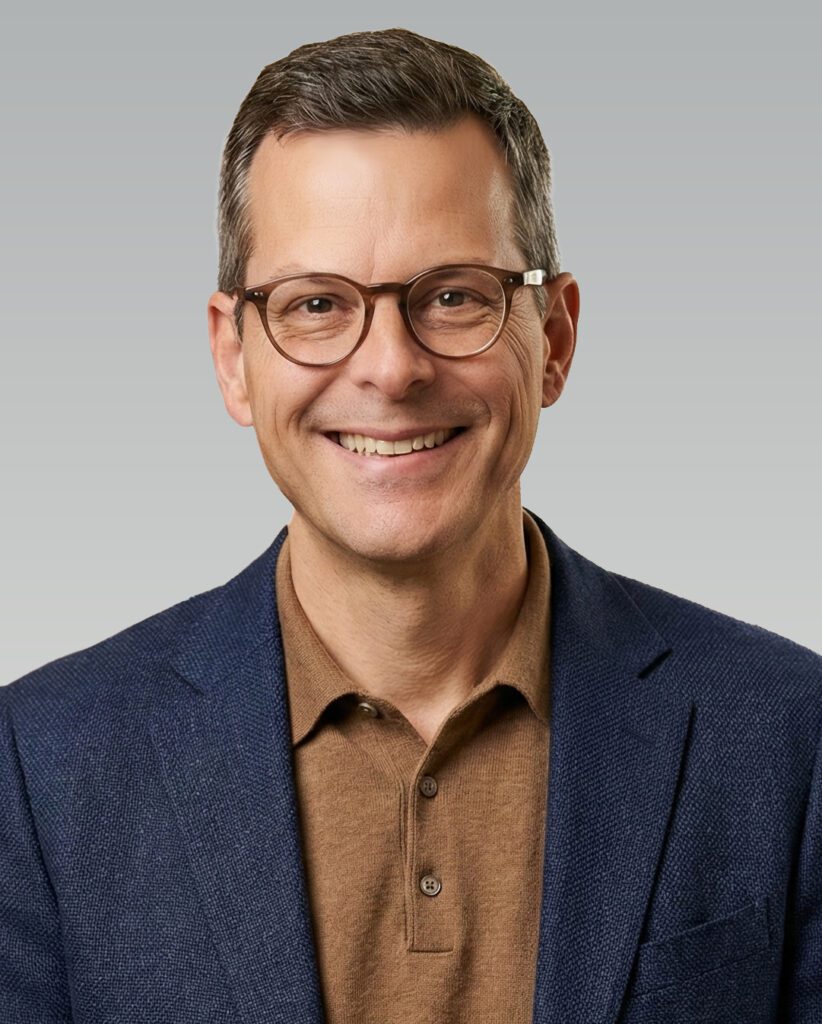
Jordan Nodelman, MSW
LCSW-QS, LCSW-C, LICSW, Board-Certified Diplomate in clinical social work & EMDR-Certified Clinician & EMDRIA Approved Consultant
Credentials & Education
- Board-Certified Diplomate in Clinical Social Work (BCD) – American Board of Clinical Social Work
- Licensed Clinical Social Worker / Independent Clinical Social Worker – Florida, Washington D.C., Maryland, Virginia, Vermont-Telehealth
- EMDRIA-Certified Therapist & Approved Consultant – EMDR International Association (EMDRIA)
- Master of Social Work (MSW) in Advanced Trauma Studies – Barry University, Miami, FL
- Bachelor of Arts in Psychology – Boston University & The Université Grenoble Alpes
Hi there, I’m Jordan.
Most of the people I work with function well. They show up, they deliver, and other people rely on them. What brings them in is the gap between that and what’s happening underneath.
Sometimes that’s imposter feelings that don’t match any of the evidence. Sometimes it’s burnout that rest doesn’t touch, or the invisible load of adult AD/HD, or old trauma that surfaces when you least expect it — a sense of just getting by rather than living.
Some of my clients are executives and young professionals. Others are nurses, teachers, parents, veterans, first responders, and therapists. What they have in common isn’t a job title. It’s having carried something for a long time without anywhere to put it down.
When people first reach out, they often say they no longer recognize the person in the mirror. My work is to help you put those burdens down for good — not manage them indefinitely.
My path to the therapy room
Where I trained. I earned my Master’s in Social Work with a concentration in Advanced Trauma Studies, and then chose to cut my teeth in community mental health rather than go straight to private practice. I spent years supporting people through acute crisis, complex trauma, and addiction — in a skilled nursing facility, in an outpatient mental health clinic, and as a staff counselor at a large Federally Qualified Health Center. That work is the foundation of everything I do now. It taught me that trauma arrives in every kind of life, and that the people carrying the most are often the ones least able to say so.
Before this. My route here wasn’t linear. I began my professional life in private equity and merchant banking as a Principal C-Suite Executive Assistant, running large national and international events and conferences for industry leaders. I later served as VP of Operations for a closely held manufacturing firm, ran a small rental property business, and sat on the board of a foundation and several local non-profits.
That career gave me a frontline understanding of sustained systemic pressure, the isolation that comes with visibility, and how quickly capable people burn out. It also taught me what happens behind closed doors when a public role and a private reality stop matching — and what absolute discretion actually requires.
What I bring. The structured, practical thinking of a former operations executive, combined with advanced trauma protocols and the clinical grounding of community mental health. In the room, that means I am both unhurried and organized about getting you somewhere.
My Approach, and who I work with
I also work with therapists — both as clients, which is its own thing and I treat it as such, and as an EMDRIA Approved Consultant and State of Florida Qualified Supervisor providing the consultation hours required for EMDR certification.
My approach
I’m solidly planted in social work principles, which means a human-first approach before any intervention. My style is interactive, collaborative, and solution-focused.
Because I’m an EMDRIA Certified Therapist and Approved Consultant, we won’t just sit and talk in circles about the past week. We treat your therapy as a dynamic container. Using advanced trauma protocols — EMDR, Brainspotting, and parts work — we actively target and rewire the negative self-beliefs holding you back, and build concrete strategies you can use.
You do not have to tell me everything to do this work. That surprises people, and it’s one of the reasons EMDR reaches things that talking hasn’t.
Who I work with
I welcome adults from every kind of background and circumstance. I’m particularly glad to offer a safe, affirming space for the LGBTQ+ community and seniors, and for anyone whose situation calls for genuine clinical discretion.
My office and practice philosophy
Whether we meet virtually across Florida, the Mid-Atlantic, or Vermont, or in person at my Wilton Manors office in the Fort Lauderdale area, the logistics are meant to be the easy part.
Real therapeutic work asks something of the body as well as the mind. So your physical comfort and your psychological safety both get attention here — from discreet scheduling to the way the room itself is set up. The aim is a space where your nervous system can settle, which is the precondition for everything else we do.
Outside of clinical work, I’m a photographer, and I spend a lot of time looking for the ordinary moments worth keeping. The photographs on this site are mine.
Why certification matters
Many therapists list EMDR after a weekend training. EMDRIA Certification requires supervised consultation hours beyond that training plus ongoing continuing education, and Approved Consultant status means I provide those hours to other therapists working toward certification. It’s a fair question to ask any EMDR therapist which of the two they hold.
Per the ABCSW, “Those who hold Board Certified Diplomate of Clinical Social Work designation have met the highest standards in clinical education, training and experience, and they are recognized for quality practice by courts, other professionals, consumers, government agencies, insurers and healthcare companies.”
-American Board of Clinical Social Work


Continuing education
A sample of the advanced training I’ve completed, with an emphasis on trauma and EMDR. A fuller list is available on request.
- EMDR 2.0: An Enhanced Version of EMDR Therapy — Drs. de Jongh & Matthijssen
- Compassion-Focused EMDR for Moral Injury and Shame-Based Trauma — Derek Farrell
- EMDR Therapy with Complex PTSD Clients Through the Lenses of Resilience — Dr. Schwartz
- The Progressive Approach to EMDR, and Conceptualizing: A Guide for EMDR Therapists — Dr. Mosquera
- EMDR: Imaginal Nurturing, Ego States and Attachment — April Steele, MSc
- Healing Survivors of Child Sexual Abuse — Robin Shapiro, LCSW
- The Flash Technique: Basic Principles and Protocols — Dr. Manfield
- Brainspotting Phase One — Dr. Rank, LCSW and Schwartzberg, LCSW
- Developmental Needs Meeting Strategy (DNMS): Ego State Interventions — DNMS Institute
- Crisis Intervention in Dissociative Disorders, and the Multidimensional Inventory of Dissociation — ISSTD
- Improving First Responder Resiliency with EMDR
- ADHD Assessment for Adults: Treatment Obstacles, Co-Morbidities and Diagnostic Dilemmas
- Clinical Hypnosis Level 1 — American Society of Clinical Hypnosis; Intensive Hypnosis Level A — Milton H. Erickson Foundation
- Mindfulness-Based Stress Reduction (MBSR) — Dr. A. Turf